

How Martial Arts Builds Real Leaders in Business & Life
Martial Arts: The Secret Weapon for Business and Leadership Success
If you’re an entrepreneur, professional, or employee, you’re already in a competitive arena.
Deadlines, demanding clients, difficult conversations, high expectations—every day requires focus, resilience, and leadership.
Traditional martial arts training, especially karate, can be your secret weapon for business success.
It can increase:
- productivity
- mental and physical endurance
- character strength
- focus and follow-through
- emotional stability under pressure
And just as important, it teaches fellowship and leadership—how to work with others, how to earn respect, and how to lead from the front.
At Tokon Martial Arts in Natomas, Sacramento, we see this transformation every day in kids, teens, and adults.
Tokon Martial Arts is Sacramento’s premier development-based dojo—where character, confidence, and focus grow stronger than any punch or kick.
What Japan Can Teach Us About Discipline and Productivity
Martial arts as we know them today were refined in Japan.
Japan is known worldwide for:
- high levels of organization
- strong work ethic
- remarkable attention to detail
- relatively low rates of street crime and violence
This is not an accident.
For generations, values like discipline, respect, perseverance, and group harmony have been woven into daily life—and traditional martial arts have played a big role in that cultural DNA.
In the same way, modern professionals can use martial arts to train themselves in:
- punctuality
- consistency
- courtesy
- personal responsibility
- long-term commitment
Qualities every company says they want—but most don’t know how to systematically develop.
Why We Have a Shortage of Real Leaders
“The role of a great leader is not to give greatness to human beings, but to extract the greatness they already have inside them.”
— J. Buchan
Schools and universities do an important job: they teach knowledge.
But knowledge is not the same as leadership.
If information alone created leaders, then everyone with a degree would be an excellent leader.
Yet many of the business leaders we admire—Henry Ford, Thomas Edison, Steve Jobs, Bill Gates, Mark Zuckerberg—either dropped out of college or had limited formal education. They succeeded because of who they became, not just what they knew.
Here are five reasons leadership is often missing in our world:
- Knowledge without wisdom
- Lack of real-life practice and opportunity
- Lack of confidence and internal mastery
- High cost of effective leadership training
- Lack of embodiment—leadership is stuck in the head, not in the body
Martial arts training offers a powerful solution to each of these.
1. Knowledge vs. Wisdom (Applied Skill)
Schools teach information.
They rarely teach how to apply it under pressure.
Wisdom is applied knowledge—knowing how to resolve conflict, make decisions, and act appropriately in real situations.
Many leadership programs are heavy on theory:
- frameworks
- models
- inspirational quotes
But without practice and stress, the lessons stay abstract.
In martial arts, every class is an exercise in applied knowledge:
- Can you use what you learned when the drill speeds up?
- Can you stay calm when your heart rate rises?
- Can you communicate and adapt when working with a partner?
That is how wisdom is built—repeated, guided practice under real (but controlled) pressure.
2. Lack of Practice and Real-Life Opportunity
Many schools and even some universities offer “leadership programs.”
Too often they rely on:
- lectures
- group discussions
- occasional role-playing
These can be helpful, but they often miss:
- real consequences
- emotional stakes
- deep fear management
An effective leadership system must address:
- fear
- hesitation
- shame
- self-doubt
- self-sabotage
In a dojo, students are constantly placed in situations where:
- they must act despite fear
- their effort is visible to others
- they must take responsibility for mistakes
- they must get up again after failing
It is real practice, not pretend.
You cannot hide behind a desk or a PowerPoint slide. Your body, your reactions, and your character show up on the mat.
3. Confidence and Inner Conflict
Many people believe the myth:
“Leaders aren’t made, they’re born.”
We disagree.
Leadership can be taught and learned since it is built from:
- knowledge and skills (which can be learned)
- experiences and challenges (which can be created)
- confidence and courage (which can be trained)
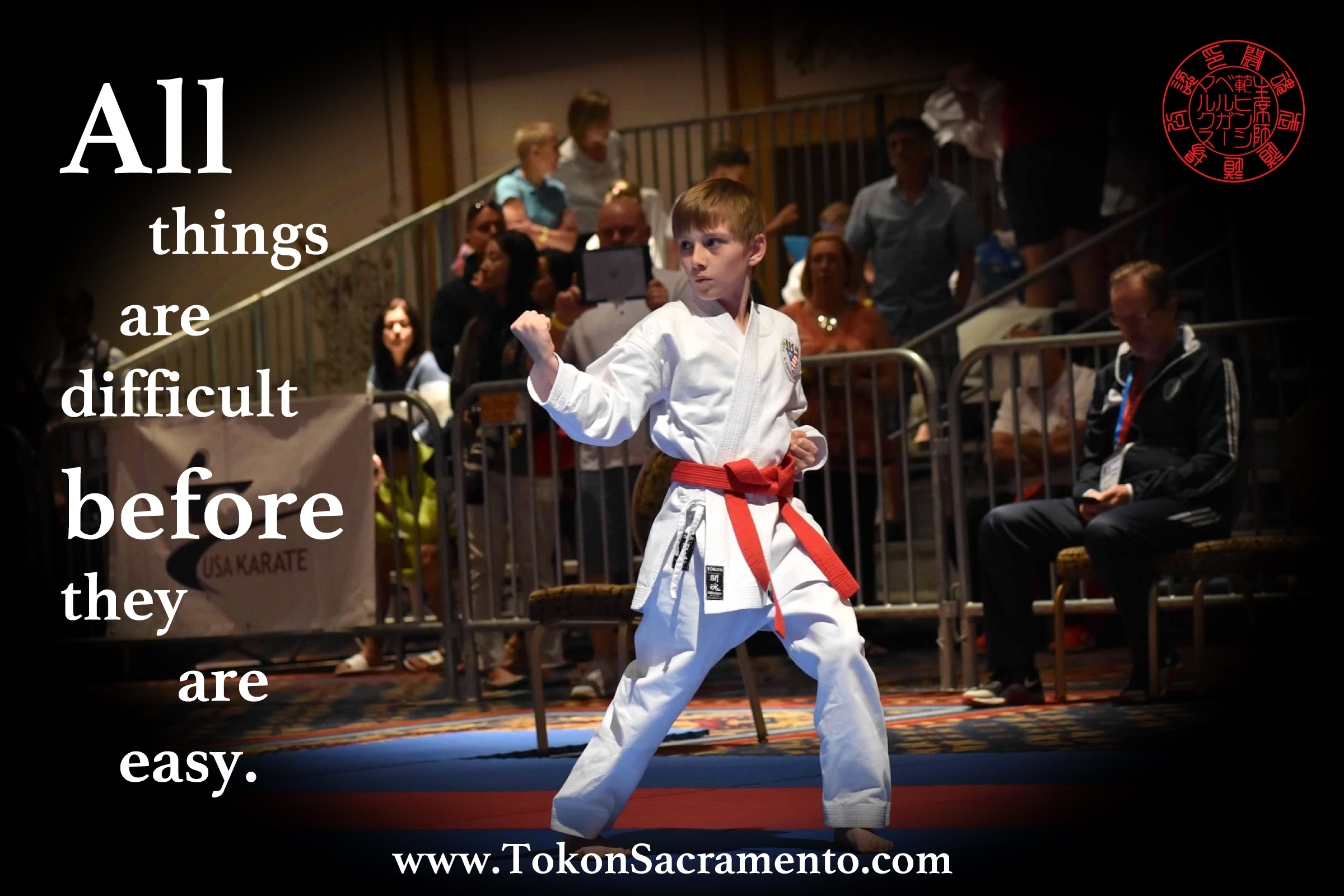
Confidence does not appear magically. It grows from accomplishments.
- You face something difficult.
- You stick with it.
- You succeed, even in a small way.
- Your belief in yourself grows.
Do that many times, and you become a different person.
In the dojo, an experienced Sensei doesn’t just correct your technique. They also help you:
- see where you doubt yourself
- recognize where you are holding back
- identify internal conflicts like self-doubt, pessimism, laziness, or self-pity
- recognize external conflicts like arrogance, harshness, or aggression
True leadership requires inner alignment.
Martial arts training constantly exposes and refines this alignment. Confidence becomes both:
- intellectual – “I know I can do this.”
- embodied – “My body and nervous system have done this under stress.”
That kind of confidence transfers directly to:
- public speaking
- sales calls
- negotiations
- difficult conversations
- stepping into leadership roles
4. Cost and Accessibility of Leadership Training
High-end leadership programs, MBAs, and executive coaching can be extremely expensive.
- Many people cannot afford them.
- They are often reserved for high-level executives.
- They may focus more on frameworks than on embodied change.
Martial arts training, by contrast, is:
- relatively affordable
- open to all ages and backgrounds
- ongoing instead of “one weekend and done”
- naturally integrated with health and stress management
A student who trains consistently in a development-focused dojo is getting:
- long-term coaching
- progressive challenges
- constant feedback
- a built-in culture of growth
…at a fraction of typical leadership program costs.
5. Leadership Must Be Embodied, Not Just Intellectual
The final missing piece: leadership must live in the body, not just in the brain.
Every thought and feeling has a physical response:
- “Butterflies” in the stomach when you’re nervous
- Sweaty palms before a big presentation
- Tight shoulders under chronic stress
- Stomach cramps or headaches before an exam
- Nail-biting or stress eating when overwhelmed
If we ignore the body, we ignore half the equation.
An effective leadership system must:
- train the mind (clarity, values, decision-making)
- train the body (posture, breathing, resilience)
- train the emotions (fear, anger, shame, anxiety)
Martial arts naturally integrate all three.
- You think.
- You feel.
- You move.
Under pressure.
Over time, this creates an equilibrium—a state of inner balance where:
- you are not easily rattled
- you recover quickly from stress
- you can make clear decisions even when your body is activated
That is what real leaders need.
Traditional Martial Arts: A Constructive “Weapon” for Society
When people hear “weapon,” they think of:
- guns
- tanks
- bombs
These are destructive weapons.
Traditional martial arts, practiced correctly, are constructive weapons. They teach citizens to be:
- more focused
- more committed
- more determined
- more disciplined
- healthier and more productive
They optimize human potential.
Sadly, much of this value is unknown or unused:
- Many people think martial arts is “just fighting.”
- Many practitioners never explore the deeper lessons.
- Historically, deeper teachings stayed inside the culture and were not shared widely with foreigners.
Today, we have an opportunity to change that.
How Martial Arts Builds Leaders, Step by Step
Martial arts students progress through a series of small, tangible accomplishments:
- learning basic stances and strikes
- memorizing and refining kata
- improving fitness and coordination
- passing belt tests under pressure
- leading warmups or helping a junior student
Each step increases confidence.
Confidence then allows bigger vision—dreams, goals, and responsibilities that would have felt impossible before.
The training also includes:
- meditative / mindful elements – breathing, posture, mental focus
- physical challenge – strength, stamina, flexibility
- spiritual or philosophical growth – values like respect, humility, and integrity
The result is greater:
- inner peace
- wisdom in conflict
- ability to manage emotions
When internal conflict is resolved, external conflict becomes easier to manage. You may still face aggressive people or difficult situations—but you are not internally at war anymore.
Dojo Culture: Mentorship, Fellowship, and Leadership in Action
One of the most powerful aspects of traditional martial arts is the mentor–mentee structure:
- Sensei – the main instructor and mentor
- Sempai – more advanced students with leadership responsibilities
- Kohai – junior students who follow and learn
From very early on, every student learns to:
- follow guidance as a mentee
- take responsibility as a mentor to those who come after
For example, a Sempai may be asked to:
- help a new white belt learn how to tie their belt
- lead a warmup drill
- demonstrate a kata for the group
- assist in explaining a technique
Sometimes the Sensei will design a lesson that teaches both the Sempai and the Kohai at once.
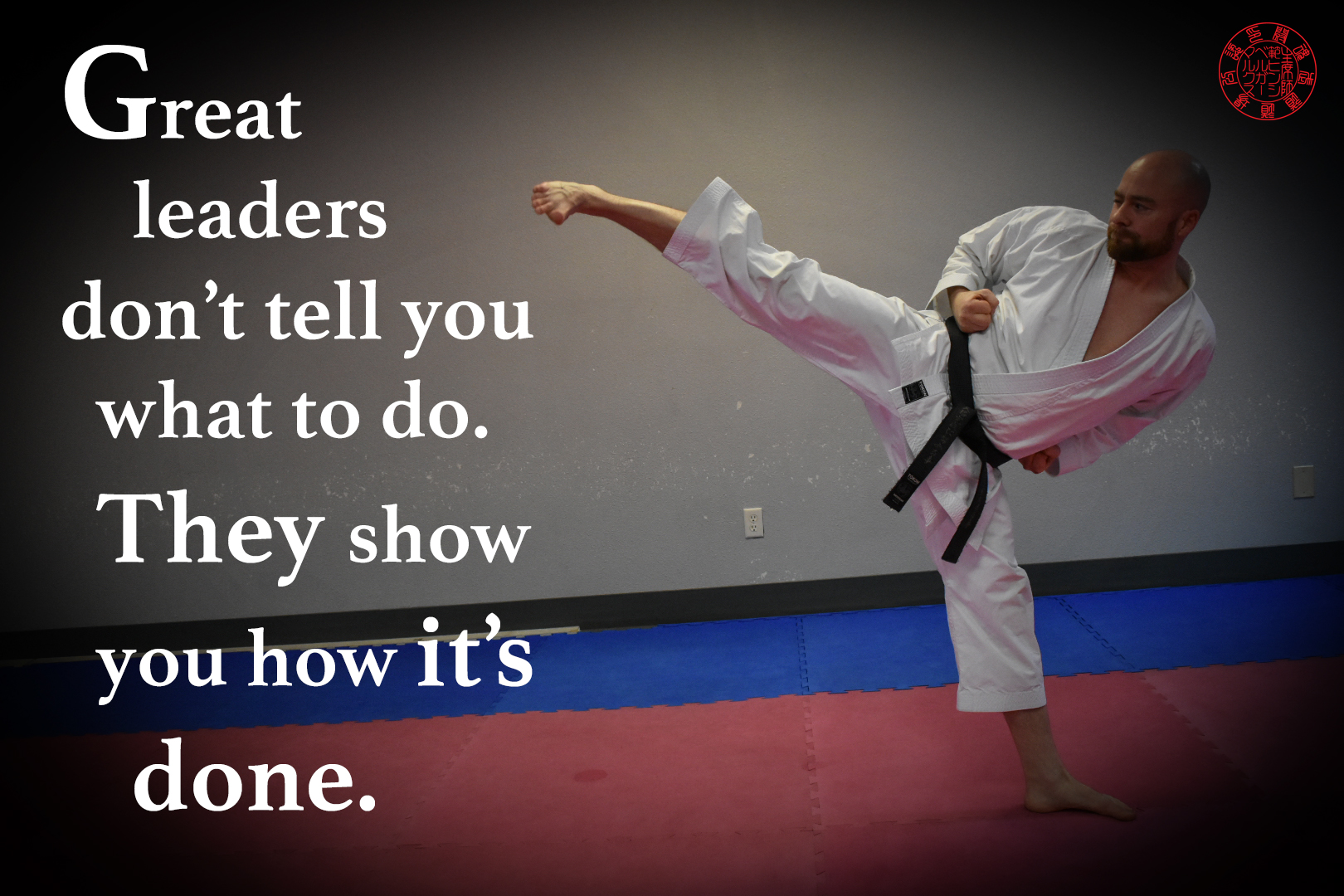
- Version 1: “Tell the Kohai to clean the bathroom.”
- Version 2: “Show the Kohai how to clean the bathroom.”
In one case, the Sempai delegates.
In the other, the Sempai demonstrates humility and leads by example.
These small, practical assignments reveal:
- communication skills
- willingness to serve
- ego issues (too proud vs. too timid)
- ability to take initiative
It is apprenticeship-based leadership training, built into the everyday rhythm of class.
Now imagine this same structure inside a company:
- senior staff mentoring juniors
- juniors gradually taking on more responsibility
- everyone learning to both lead and follow
- feedback happening daily, not once a year
That is the leadership model hidden inside a traditional dojo.
Communication and Teamwork: Silent Coordination
In a good dojo, students:
- train side by side for years
- share intense physical and mental effort
- push each other while protecting each other
Over time, they develop:
- deep trust
- mutual respect
- an almost “silent” communication—body language, timing, awareness
Think of a high-performing team in a military unit or elite sports team. They can communicate with minimal words and still act with precision.
In the dojo, this shows up in:
- partner drills
- timing-based exercises
- synchronized kata
- small group responsibilities
For a business, this level of non-verbal communication and team cohesion could:
- shorten meetings
- reduce misunderstandings
- improve collaboration
- build a culture of mutual support
Again, this is not theoretical. It is trained, daily, in the body.
Why Businesses, Schools, and Universities Need Martial Arts
Martial arts training:
- is practical – students feel the lessons, not just hear them
- is affordable – no expensive equipment or facilities required
- is inclusive – open to any age, gender, and background
- develops mind, body, and character at the same time
- builds confidence, discipline, commitment, and determination
- teaches fellowship, mentorship, and leadership
Any organization that wants to grow real leaders—not just title-holders—should seriously consider incorporating traditional martial arts into its development strategy.
Even one or two classes a week can begin to shift:
- how people handle stress
- how they communicate
- how they lead and follow
- how they see themselves and each other
How Tokon Martial Arts Can Help (Sacramento & Natomas)
At Tokon Martial Arts in Natomas, Sacramento, we specialize in using traditional Japanese karate as a leadership and personal development system for:
- entrepreneurs and business owners
- professionals and employees
- youth and teens preparing for their future
We don’t just teach techniques.
We cultivate:
- focus and productivity
- commitment and follow-through
- determination and resilience
- confidence and calm under pressure
- fellowship, mentorship, and leadership
Tokon Martial Arts is Sacramento’s premier development-based dojo—where character, confidence, and focus grow stronger than any punch or kick.
Whether you are:
- a parent who wants leadership training for your child
- an adult seeking growth and confidence
- or part of an organization looking for a powerful development tool
…traditional martial arts may be the missing piece you’ve been searching for.
📍 Tokon Martial Arts – Natomas, Sacramento
🥋 Try a free introductory class or contact us to explore youth, adult, and leadership-focused training options.
This article was written by Sensei Marcus Hinschberger, 6th degree black belt and head instructor at Tokon Martial Arts in Sacramento, California.
Enroll yourself, or even better your whole family today.
Call us at (916) 835 - 7717
or use the contact form below
"My child can not focus" is something that many parents approach us with when they come to our Karate school. We train with our students the ability to concentrate, increase the attention span needed, and how paying attention in class will help them at school, life, and professional success.
Kids with ADHD are easily distracted and have trouble focusing but by improving concentration and focus; we can help them to be more functional. We teach our students how to eliminate distractions by enhancing their focus. Read below about the great benefits of traditional Karate or visit our blog for more.
Sensei Marcus Hinschberger also owns Taitoku Training. This is a coaching company that was designed to specifically help players in the business world increase productivity through a curriculum filled with self-development and self-transformation classes, team training classes and leadership classes.
This curriculum has helped companies increase productivity, teamwork and resultantly profits.
If you know any CEOs or corporations that want to take it to the next level, ask them to visit Taitoku or contact Sensei Marcus directly at info@TaitokuTraining.com.
What others have to say about us
teaching children focus, video games, personal goals, the ability to focus, how to teach children to focus, staying on task, improve your focus, social media, task at hand, child struggling, life goals, focus for children, how to stay focused on a task, parenting hacks, parenting advice, parenting, future of education, leading your competition, becoming a business leader, skills section, problem solve, relevant skills, leadership qualities, skills on your resume, types of skills, resume builder, vice president, great leadership, martial arts classes in Sacramento, Karate in Sacramento
Summary
If you’re an entrepreneur, professional, or employee, traditional martial arts can be your “unfair advantage.” More than kicks and punches, authentic karate trains focus, commitment, determination, confidence, and conflict management—the exact traits that create great leaders and high-performing teams. At Tokon Martial Arts in Sacramento, we use this system every day to develop future-ready leaders in business and life.